


Which French AML/CFT duties does Tempolia help you monitor?
In France, AML/CFT concerns money laundering and terrorist financing. Its framework includes the Monetary and Financial Code and rules specific to the professions concerned; it is not a single “AML law”.
Which organisations are concerned?
- Accountants: they are subject to French AML/CFT duties and apply, in particular, the NPLAB professional standard to organise due diligence, risk assessment and client monitoring.
- Lawyers: duties apply to the activities listed in Article L. 561-3, including certain property or financial transactions, company formation or management and tax advice. Judicial proceedings and legal consultations benefit from exceptions, particularly for suspicious transaction reporting, under the conditions set out in that article. When a report is required, it goes through the president of the bar (bâtonnier).
- IT services companies (ESN) and engineering consultancies: providing IT, consulting or engineering services does not, on its own, make them subject to AML/CFT duties. Check whether an activity actually carried out falls within the list in Article L. 561-2.
- Associations: association status and receiving donations or grants do not, on their own, create these duties. They depend on whether an activity falls within the scope of Article L. 561-2.
An organisation outside that scope can use Tempolia’s AML monitoring to document its knowledge of clients or partners, checks, decisions and reviews, according to its internal policy or contractual commitments. For example, an IT services company can document a new client, an engineering consultancy a project owner and an association a partner or funder. This voluntary monitoring does not bring the organisation within the statutory scope or extend NPLAB to those activities.
Open AML monitoring
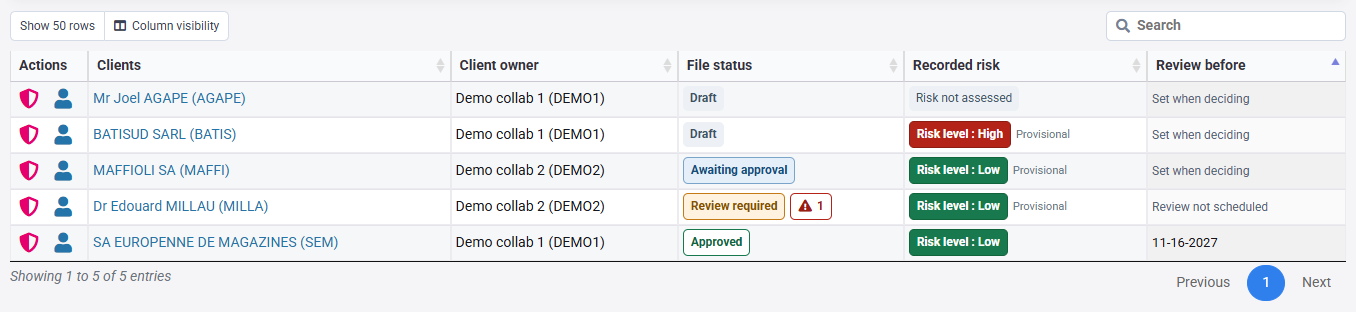
Go to Clients > AML due diligence. The portfolio defaults to ongoing relationships based on each client’s departure date. Choose All relationships or Ended relationships to review the past. Tiles open preparation, pending decisions, reassessment, overdue or upcoming reviews and alerts. Priorities overlap, so their counts must not be added together. If the entry is missing, have AML activation and your access rights checked.

In the Actions column, select the shield to open the file in the client record’s AML tab. The client name and person icon open the general client record. The file’s Portfolio AML monitoring link returns to the original relationship scope and filters.
Prepare, decide and monitor
The Prepare / Submit / Decide / Monitor and reassess timeline locates the file in its workflow. What to do next points to the relevant check or command for the current status and your permissions.
Open a client to document identification, relevant people, beneficial owners and four risk factors. One client file is shared across engagements. Submit the preparation to an authorised approver, then monitor the relationship. Significant changes require review before the next scheduled date when necessary.

Keep the professional checks in view
Tempolia checks entries, organises decisions and retains their history. Your organisation obtains and checks evidence, searches beneficial ownership, PEP and sanctions sources, assesses operations and maintains procedures and training. No external register or sanctions list is searched automatically. Start with client knowledge and risk assessment.
Reference sources
Code monétaire et financier - art. L. 561-2 / L. 561-3 · TRACFIN - professions du droit · TRACFIN - professions du chiffre · NPLAB