

How do electronic invoicing, e-invoicing and e-reporting work with the JeFacture PA?
The reform imposes two tax flows through a PA: e-invoicing and e-reporting.
If you use Tempolia’s API interconnection with JeFacture as your PA, included in subscriptions, this is how it is organized:
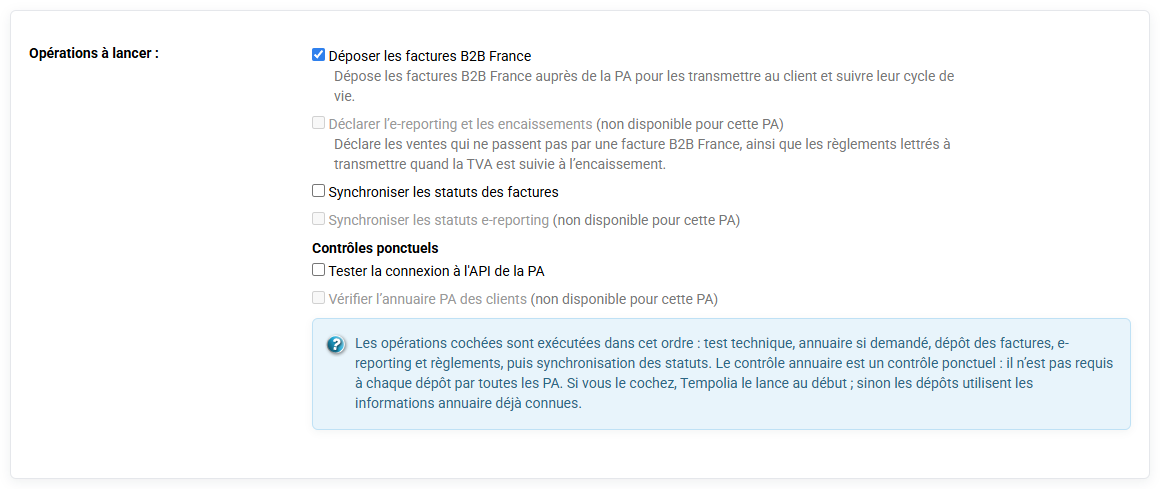
- e-invoicing: B2B invoices between French companies must be sent to the PA. Tempolia sends Factur-X invoices containing all information to the PA, which forwards them to the clients’ PA. The PA also extracts the main tax data from the invoice for the French tax authority. A JeFacture identifier is stored by Tempolia so that payment data related to the invoice can later be associated.
- e-reporting: this concerns operations that do not go through e-invoicing, such as B2C, exports and certain international operations. Transaction and payment data must be sent to the French tax authority. To simplify, Tempolia also sends invoices in this case, and payments linked to those invoices are sent to the tax authority by the PA when necessary.
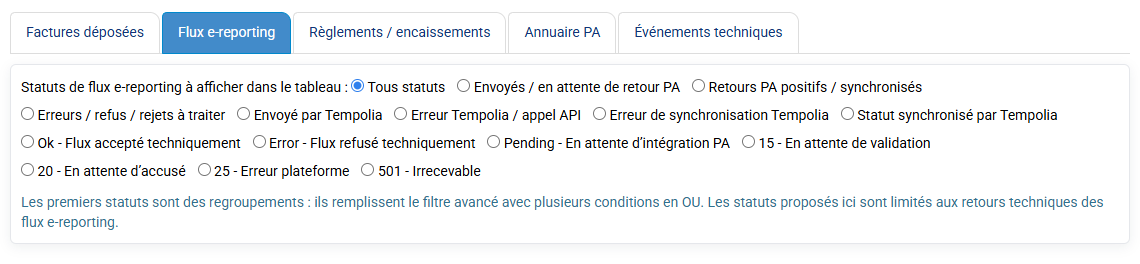
In summary: Tempolia sends all invoices to JeFacture and, when necessary, collection information. JeFacture then handles regulatory transmission to the administration.
Tempolia is therefore the business system for invoices and payments, while the PA manages tax compliance.