


How do I prepare the firm’s French AML exposure questionnaire with Tempolia?
The CNOEC questionnaire assesses the practice’s exposure. It differs from a client questionnaire and risk assessment: a portfolio of approved client files is not enough to complete it.
Prepare the figures
First choose the portfolio scope: Ongoing relationships, All relationships or Ended relationships. The questionnaire summary uses that scope and your account permissions, independently of detailed table filters. AML guide and references brings together the workflow, example situations and regulatory references; it is also available at the end of each file.
In AML due diligence, open the firm exposure questionnaire section and export the CSV summary if authorised. It includes the date, accessible clients, preparations, deadlines, alerts and recorded risks. Categories can overlap and draft risks remain provisional. A restricted user does not export the entire firm’s figures.

Complete the firm’s organisation
Gather the practice risk map, procedures, responsibilities, permissions, training and internal controls separately. File guidance distinguishes obligations from Tempolia’s internal policy. Answer the official questionnaire using the scope and dates requested by the campaign. The Tempolia summary is neither a complete answer nor an official filing.
Train the people implementing the framework
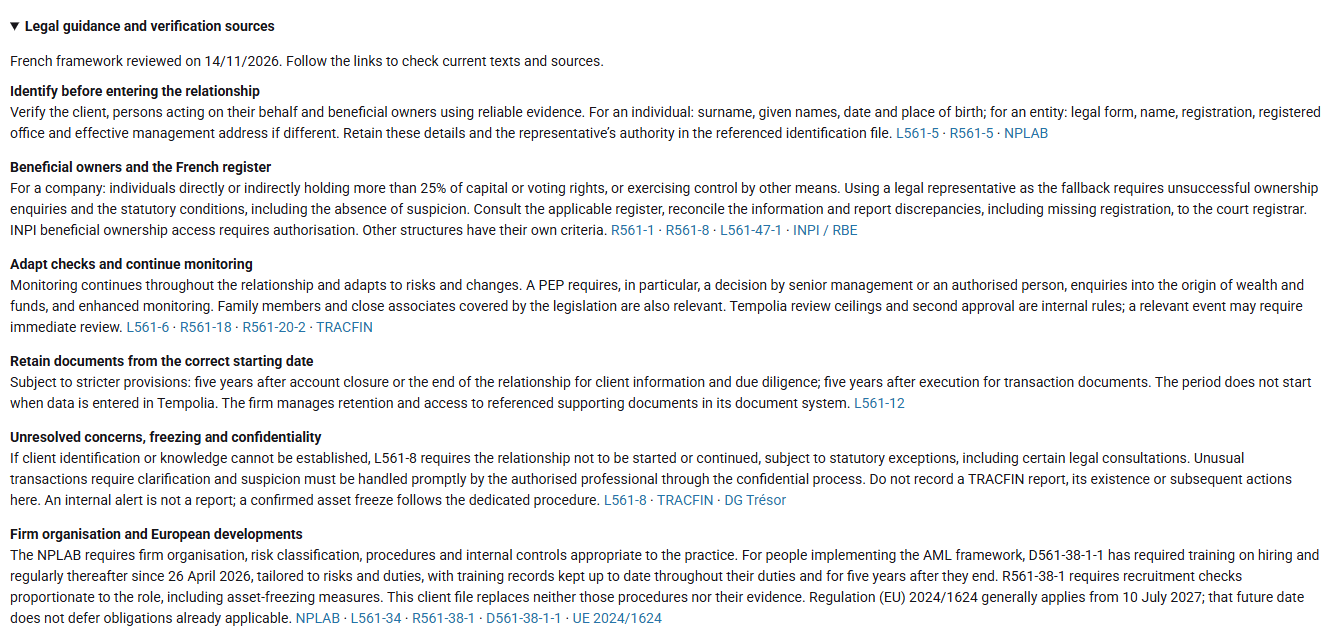
In a French accountancy practice, people implementing AML obligations must receive training on hiring and regularly thereafter. Since 26 April 2026, D561-38-1-1 specifies that training covers due diligence, asset freezing, penalties for breaches and recognising transactions potentially involving money laundering or terrorist financing. Tailor content and frequency to the practice’s risks and the relevant people’s duties, activities and hierarchical positions.
Document recruitment and retain training records
For people implementing the AML framework, R561-38-1 requires recruitment checks strictly proportionate to the risks of the role, taking duties, activities and hierarchical position into account. In particular, check that they are not subject to asset-freezing measures. Keep procedure references and evidence within the practice’s authorised internal process; a client file is not a recruitment file.
Keep mandatory training records up to date throughout the relevant people’s duties and for five years from the end of those duties. This starting point differs from the end of a client relationship. To prepare the questionnaire, gather, for example, dates, programmes, people trained and certificates or other available evidence, so training content and frequency can be retrieved for a control. The AML CSV summary is not a training register and does not retain those documents for you.
Check before answering
Reconcile figures to the actual population and explain unassessed files, deadlines and alerts. Check current CNOEC instructions rather than automatically reusing an old campaign. Use AML priorities to prepare client files requiring review.
Reference sources
Training and record retention - D561-38-1-1 ; Recruitment - R561-38-1 ; Decree of 24 April 2026 ; CNOEC - questionnaire d’exposition